
About IBS

IBS has been called many things over the years, the most common being spastic colon. It is a condition that has confused the medical community for centuries. In the past, people with IBS were often told they were just depressed or hysterical and that their symptoms were "all in their head".
But this is an exciting time for IBS sufferers, because research in this area is exploding and the medical community is starting to take the condition more seriously.
To find out more about IBS and possible causes of the syndrome...
-
Watch the video
-
Click links in the white box
-
Just scroll down!
What is IBS?
Irritable bowel syndrome is a disorder of the gut-brain interaction (DGBI).
So what does that all mean? Let’s break it down.

What is a bowel?
Your bowel is part of your digestive system, also known as the gastrointestinal (GI) tract. You have a small bowel and a large bowel.
The small bowel is also called the small intestine. It continues to break down food coming from the stomach and absorbs nutrients.
The large bowel is also known as the large intestine or the colon. It turns food waste coming from the small intestine into poop and then moves it along toward the rectum. Along the way it absorbs water, vitamins and minerals into the body. It is also the home of trillions of bacteria, over 500 different species, which ferment food waste that you can’t digest. This fermentation also creates gases, like methane.
The large intestine is the one usually studied in relation to IBS, but there is some evidence that the small intestine may also be involved.
The exact cause of IBS is still unknown, but there are two irritating bowel related things that IBS sufferers share – problems with bowel movements (BMs or pooping) and pain.
People with IBS have constipation (IBS-C), diarrhea (IBS-D) or sometimes both (IBS-M). They experience pain in their gut and sometimes when they poop.

Why irritated bowel?

A syndrome is a group of symptoms or physical findings that seem to group together, but the cause of the symptoms is not fully understood. This is different than a disease, which is a health condition with a known cause.
The exact cause of IBS is still unknown. It is a collection of gut and bowel related symptoms. It is not one single entity and you may not experience all the same symptoms as other IBS sufferers.
What is a syndrome?

-
Abnormal BMs (less than 3x per week or more than 3x per day)
-
Change in bowel movements (BMs) – constipation, diarrhea or mixed
-
Distension (you can see an increase in the size of your belly)
-
Bloating (feeling like there is an inflated balloon in your belly)
-
Urgency or feeling like you suddenly have to go right now
-
Feeling like you haven’t completely emptied your bowels
-
Straining when trying to poop
-
Mucus in your stool
-
Belly pain
-
Lots of gas
-
Cramps
If you are experiencing some of these symptoms, talk to your doctor.
It's important to get an actual IBS diagnosis to rule out other causes.
More on this in Get Your IBS Diagnosis.
Common Symptoms of IBS
There is a two-way communication network that directly connects your gut to both the thinking (cognitive) and feeling (emotional) centres of your brain. The gut and the brain are connected through the largest nerve in the body, called the vagus nerve. They are also connected through other pathways, including the immune system, the endocrine system (hormones) and the bacteria in your gut. Experts now believe that problems in this complex communication system can lead to the development of IBS.
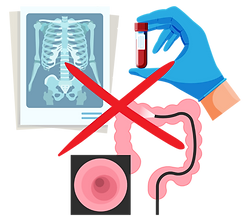
IBS has only been recently classified as a DGBI. For years it was classified as a functional disorder, meaning that physically everything seems normal, but there are still signs that something is wrong. Despite the new classification and criteria, this still holds true and IBS can't be diagnosed from tests or procedures such as a colonoscopy, X-Ray or blood test.
The IBS diagnosis is based on symptoms reported to the doctor after other causes have been ruled out. Symptoms are compared to the Rome IV Criteria for IBS. More about this in the Get Your IBS Diagnosis section.
What is a disorder of the gut-brain interaction (DGBI)?

Who gets IBS?
The short answer is that anyone can develop IBS at any stage in their life. But it seems to affect more women than men and is most often diagnosed before the age of 40.
IBS is thought to affect 7-15% of the population worldwide. Even though IBS is a common condition, it often goes undiagnosed and the numbers are probably higher.
Canada has one of the highest rates of IBS in the world, yet only about 40% of people actually seek help for their condition.
Can IBS be cured?
IBS is considered to be a chronic disorder. This means that it is a long-lasting condition that can usually be controlled, but not cured.
However, IBS symptoms can change over time. You may go through periods when you experience few symptoms and then suddenly your IBS will flare up again.
There is no cure for IBS, but medication, nutrition and lifestyle changes can help manage symptoms.

What causes IBS?

The short answer here is that nobody really knows. Though most people do agree that the cause of IBS is multifactorial, meaning there is more than one cause.
Keep in mind that the systems in the body all interact with each other. This makes pinpointing exact causes very difficult, because there are many factors involved and they influence each other. IBS likely involves an interaction between the GI tract, the nervous system, the immune system, hormones, bacteria in the gut and external factors like stress and diet.
Also keep in mind that IBS has been used as a catch all for functional digestive issues. Now that IBS has been redefined as a disorder of gut/brain interaction, some of the "causes" of IBS may turn out to be separate conditions.
As I mentioned earlier, there has been an explosion of IBS research in the last decade and new discoveries are being made every day. Many theories are being explored, so the following is just a very simple run down of the most promising.

Diet

Many IBS sufferers are sensitive to FODMAPs (short for Fermentable oligo, di, monosaccharides and polyols). FODMAPs are a type of carbohydrate that are poorly digested by some people, so they end up reaching the colon. Gut bacteria then use these carbs for fuel, producing gas and causing digestive symptoms.
Many IBS sufferers also report an increase in symptoms after eating certain "trigger" foods. Disordered eating can also play a role and diet can affect the gut microbiome.
Diet doesn't necessarily cause IBS, but it can make symptoms much worse.
Problems with Motility
Motility is a term used to describe the speed of the contractions, or squeezing, of muscles that mix and move your food through your GI tract. These contractions are automatic. Once you start to swallow, you no longer have conscious control over moving things along and out the other end. IBS affects this movement of digested food through the intestines.
If the contractions are too fast, things move too quickly through your digestive system and you get diarrhea. If the contractions are too slow, then things don’t move fast enough and you get constipation. Both can lead to belly pain.
One theory is that problems with motility are connected to problems in communication between the gut and the brain. New research is showing that the bacteria in your gut may also play a role.

Visceral Hypersensitivity (VH)
Viscera are the internal organs in your chest, abdomen and pelvis. If you have VH, your threshold for pain in these organs is lower than normal. In the case of IBS, it’s the organs of the GI tract.
The gut and the brain are very connected. They are constantly sending signals back and forth, but normally they don’t share every little detail with each other. The information must be important enough to cross the "too much information" barrier.
Most people don’t feel pain when food, fluids or gas are moving through their digestive system. But some people with IBS seem to be more sensitive to this internal pressure. Signals that would normally be blocked make it through to the brain, causing pain.
VH has been linked to motility problems, mostly through this connection between the gut and the brain.


Studies have also shown other differences in the way people with IBS perceive and process information in their brains that could affect pain signals.
There are many factors thought to be involved in the process of VH, including different branches of the nervous system, bacteria in the gut, psychological factors like anxiety and depression, the immune system, sleep, diet and genetics.
The Gut-Brain Axis
This is a huge topic and it has become one of the most researched areas in biology over the last twenty years. This is a very simplified explanation of the gut–brain connection and why it’s important to the study of IBS.
The Enteric Nervous System (ENS)
In the past, the general view was that the big brain in your head was completely in charge of all your decision-making and bodily functions. Then scientists discovered a “second brain” with a huge network of nerves just as large and chemically complex as your big brain.
This “second brain” is known as the enteric nervous system (ENS) and it’s found in the walls of your digestive system. The gut brain’s main role is controlling digestion, right from swallowing all the way to the other end.
The Gut-Brain Axis
The gut-brain axis is a two-way communication network that directly connects your gut to both the thinking (cognitive) and feeling (emotional) centres of your brain.
The gut and the brain are connected through the largest nerve in the body, called the vagus nerve. They are also connected through other pathways, including the immune system, the endocrine system (hormones) and the bacteria in your gut.

Gut Feelings
So it seems that your big brain is not completely running the show after all! An irritated gut could even be sending signals to the brain that change your mood and affect your thoughts, which means that therapies that target anxiety and depression could help IBS symptoms and vice versa.
The Stress Response
Stress is thought to be one of the most important things that the brain and the gut talk about.
To understand how stress can interfere with digestion and cause symptoms of IBS, let's look first at the nervous system and a normal stress response.
The autonomic nervous system (ANS) is the one to focus on here. It controls processes in your body that you have little control over, including digestion.

Normal Stress Response
You have a problem or emergency...
Sympathetic nervous system (SNS) takes over
Activates flight, fight or freeze response
Hormone cortisol is released causing...
-
Muscle tightness
-
Increased heart rate and blood pressure
-
Stress signals travel along gut-brain axis
-
Energy and blood flow directed away from gut to brain and muscles
-
Digestion slows or shuts down


The PNS calms and relaxes the body...
-
Muscles relax
-
Breathing returns to normal
-
Decreases heart rate and blood pressure
-
Body sends resources back to the gut
-
Digestion continues
Activates rest and digest response
Parasympathetic nervous system (PNS) takes over
Problem solved or emergency passes...

Stress is not always a bad thing. The SNS motivates you and makes you perform better. When you’ve dealt with the problem, your PNS takes over and you relax and continue with digestion.
This balance between the SNS and the PNS is a good and normal stress response for the short term.
Stress and IBS
The problems start when your brain stays in emergency mode and you constantly feel stressed and tense. Remember that your body is not very good at telling the difference between emotional and physical safety, so negative emotions could cause a stress response even if you aren’t actually in physical danger. Thoughts are also very powerful, so imagining or reliving stressful events may have a similar effect to actually being in the situation.
Ongoing feelings of stress, worry, anxiety or fear can cause energy and blood flow to continually be directed away from the gut. This interferes with digestion of food, absorption of nutrients and the production of mucus to protect the walls of the GI tract. If the walls are damaged the immune system could be activated, causing inflammation and pain.
Muscles in your gut may react by tightening up or spasming, causing constipation or diarrhea or both (motility). The gut may become more sensitive (VH) causing pain.
Stress can also be bad news for the good bacteria that live in your gut. If the gut is not a nice place to be, they may die out and be replaced by bad bacteria.

Neurotransmitters

Neurotransmitters are chemical messengers. They carry chemical signals (messages) from a neuron (nerve cell) to another nerve cell, a muscle cell or a gland.
Neurotransmitters act as messengers of the gut-brain axis. If your body is not producing enough or they are not working like they should, then the different parts of the gut-brain axis cannot communicate properly.
Neurotransmitter dysfunction is related to some IBS symptoms, especially motility and visceral hypersensitivity. It could also be involved in other IBS symptoms such as diet related digestive problems, anxiety, depression and fatigue.
The bacteria in your gut could also play a role, because they make neurotransmitters and also affect their use and production in other parts of the body.
A number of neurotransmitters are being studied in relation to IBS. The two most promising are serotonin and histamine.
Serotonin
We often think of serotonin as the happy hormone. It’s true that it does act as a hormone and is involved with feelings of happiness, depression and anxiety. Serotonin is also a neurotransmitter and plays an important role in the gut. It affects motility and secretions (fluids, enzymes, mucus etc.). It may also be involved in pain sensations.
Although we often think of serotonin as a brain chemical, 95% of the serotonin in your body is actually in your gut.

Histamine
We usually think of histamine in relation to allergies, but it has many functions in your body. In the gut it can affect many things, including motility, inflammation and your pain response.
Normally histamine sends its message to the gut and then gets cleared away. Research is showing that people with IBS might not have enough of the enzyme that gets rid of the histamine. This build up could be the cause of abnormal inflammation and pain.

The Immune System
The gut and the brain also communicate through the chemical messengers of the immune system. The majority of your body’s immune cells are found around the gut, since the digestive tract is constantly receiving substances from outside the body that could contain harmful bugs.
Stress and the immune system
Ongoing stress means less blood going to the gut and less mucus being made. Mucus protects your body from bad bugs (pathogens) by trapping them and also protecting the cells of the intestines. If the cells are damaged, bad bugs can escape into the bloodstream. This is called intestinal permeability.
Immune cells that live in the gut walls then try to deal with these invaders, which can cause inflammation in the gut walls. The immune cells also start to secrete large amounts of signal substances that make their way to the brain. This alerts the brain that something is up and could be felt as painful sensations in the gut.

The Endocrine System
The endocrine system is made up of the glands and organs that make hormones and release them directly into the blood so they can travel to tissues and organs all over the body. There are a few different ways that hormones may be related to IBS.

Gut-Brain Axis
Hormones are important chemical messengers of the gut-brain axis.
The gut-brain axis is a two-way communication network that directly connects your gut to both the thinking (cognitive) and feeling (emotional) centres of your brain.

Gut Hormones
Gut hormones control and regulate GI motility and sensations in the gut. Many people with IBS experience bowel symptoms soon after eating a meal. This could mean there is a problem with the gut hormones. They may be too reactive or there may not be enough of them.
There is also interaction between the gut hormones and the gut microbiota.

Sex Hormones
Sex hormones like estrogen, progesterone and testosterone may influence IBS symptoms. Receptors for these hormones have been found in the GI tract, which suggests that the GI tract is designed to sense and react to them.
More research has been done with women in relation to sex hormones. Many women experience changes in GI symptoms around their period when the sex hormones are fluctuating the most, but those with IBS usually report more severe symptoms. Often symptoms will lessen when a woman enters menopause.

Stress Hormones
We’ve already discussed the link between stress and IBS. There are a number of hormones involved in your stress response that are currently being studied in relation to IBS.
Cortisol is the main stress hormone involved in the physical effects in your body in response to emotional stress. In people with IBS cortisol may be over-reactive.
The Gut Microbiota
Along with the gut-brain axis, this is the other hottest topic in IBS research.
The gut microbiota are all the microorganisms, such as bacteria, that live inside your gut. Tens of trillions of microorganisms live there, most of them in the large intestine.
Everyone’s gut microbiota is different, but they all do the same thing. They help the body digest certain foods that can’t be digested by the stomach and the small intestine, make vitamins and play a role in the immune system.
Everything is Connected
The gut microbiota are also connected to other systems in the body, so figuring out what causes what is a little bit of a chicken and egg situation. In fact, all the possible causes listed here have a connection to the gut microbiota.

Dysbiosis and IBS
Dysbiosis occurs when the gut bacteria are out of whack. Perhaps there are too much of one type and not enough of another, or good bacteria die off allowing bad bacteria to move in and take over. Recent studies have shown an association between dysbiosis and IBS. It appears that people living with IBS have fewer different kinds and more unstable gut bacteria than people without IBS.
This is a fairly new area of research and there is much that science doesn’t know about the gut microbiota. But new discoveries are being made everyday, so this is an important area to watch.

Genetics

It is common for people in the same family to have IBS. Gene studies have shown that there may be some genes relating to the intestines that could contribute to IBS. But so far it seems that other factors that families share like diet or learned behaviors regarding stress management play a greater role.
Interestingly, one study found more evidence of a shared genetic pathway between psychological traits like anxiety and IBS.
